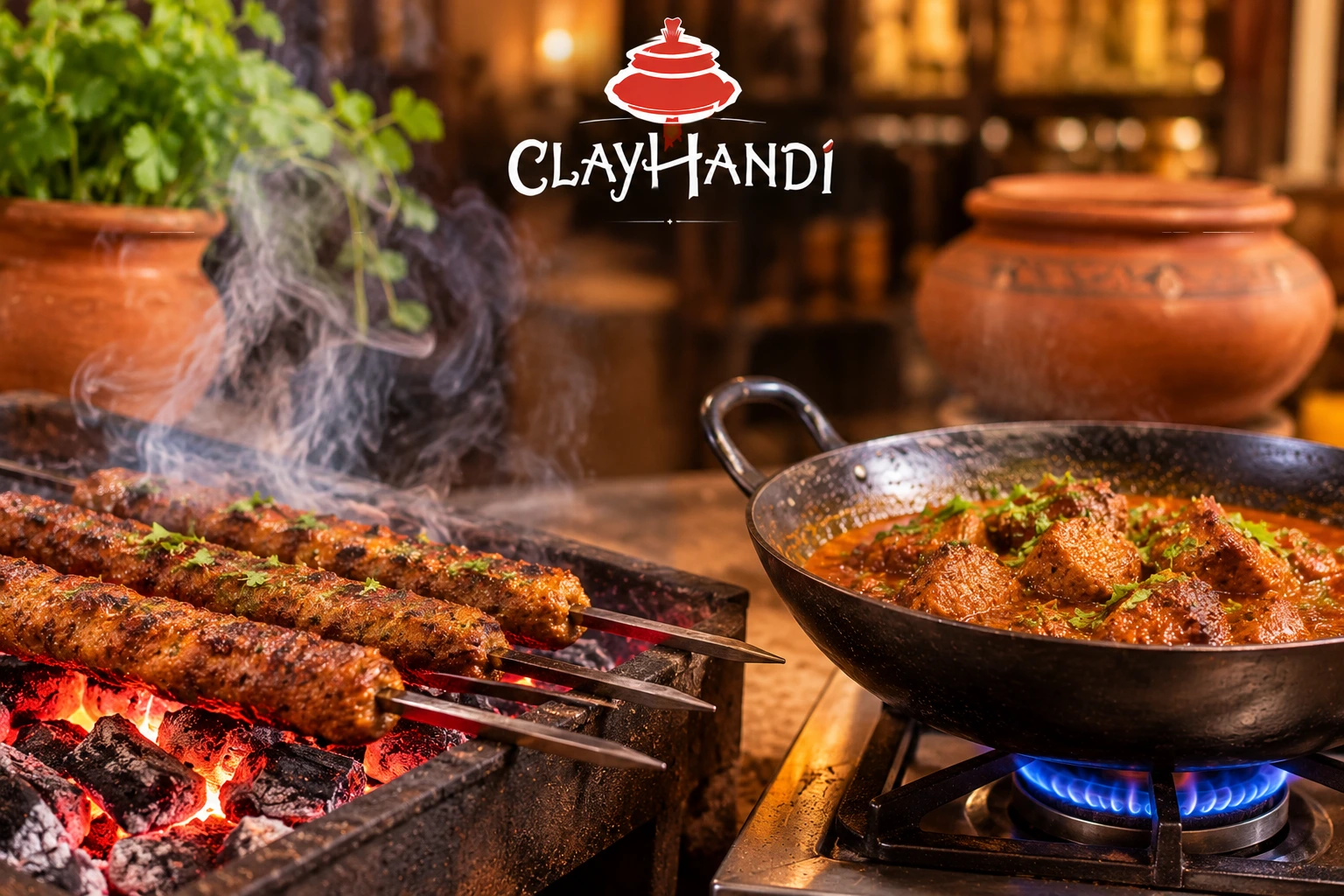
What You Need To Know
- Open fire cooking wins on flavor for grilled meat, kebabs, bread and vegetables: char, smoke and crust.
- Stove cooking wins on control, which matters for curries, sauces and anything that simmers.
- Smoky flavor comes mostly from burning wood breaking down into compounds called guaiacol and syringol.
- Charcoal and wood produce more smoke than gas, but dripping fat creates some smoke on any grill.
- Heavy charring creates compounds worth limiting, so aim for browned, not burnt.
Open fire cooking gives food something a stove can’t: smoke, char and a crust built by flames from above and below. For grilled meats and breads, fire usually tastes better.
But a stove gives you control, and control is what makes a great curry, sauce or slow braise. The best kitchens use both.
We cook with fire and with steady heat every day at our restaurant in Buffalo. Here’s what each one actually does to flavor, and when we’d pick one over the other.
What is the difference between open fire cooking and stove cooking?
The biggest difference is how heat reaches the food. Open fire and wood fire cooking hit food with radiant heat from the flames plus contact heat from the grate.
A stovetop works mostly through contact. The pan heats, and the pan heats the food.
Chemist Kristine Nolin explains in PBS NewsHour’s science of grilling that this mix sears some surfaces while cooking the rest. The range of temperatures builds more complex flavor.
Picture the difference between sunbathing and sitting on a heated bench. The sun warms you from every exposed angle at once. The bench only warms what touches it.
| Open fire / live fire | Stove | |
|---|---|---|
| Heat type | Radiant plus contact | Mostly contact |
| Heat control | Takes skill, changes constantly | Instant, precise |
| Smoke | Lots, especially from wood | Little, unless fat burns |
| Best for | Kebabs, tandoori, flatbreads, vegetables | Curries, sauces, rice, slow braises |
| Learning curve | Steep | Gentle |
Where does smoky flavor come from?
Smoky flavor comes from wood breaking down in heat. Wood contains lignin, the tough material that binds its fibers, and burning lignin releases syringol and guaiacol.
According to the same PBS article, those two compounds are mainly responsible for smoky flavor. Wikipedia’s entry on syringol notes that both come from the pyrolysis of lignin, the breakdown of wood by heat.
That’s why wood fired flavor changes with the wood. Different trees carry different amounts and types of lignin, so oak, apple and mesquite each smoke a little differently.
Fat matters too. When fat drips onto hot coals, it burns into smoke that rises back onto the food, which happens even on a gas grill. And because fat grabs smoke molecules, a well marbled kebab picks up more smoky flavor than lean chicken breast.
Is charcoal cooking better than gas?
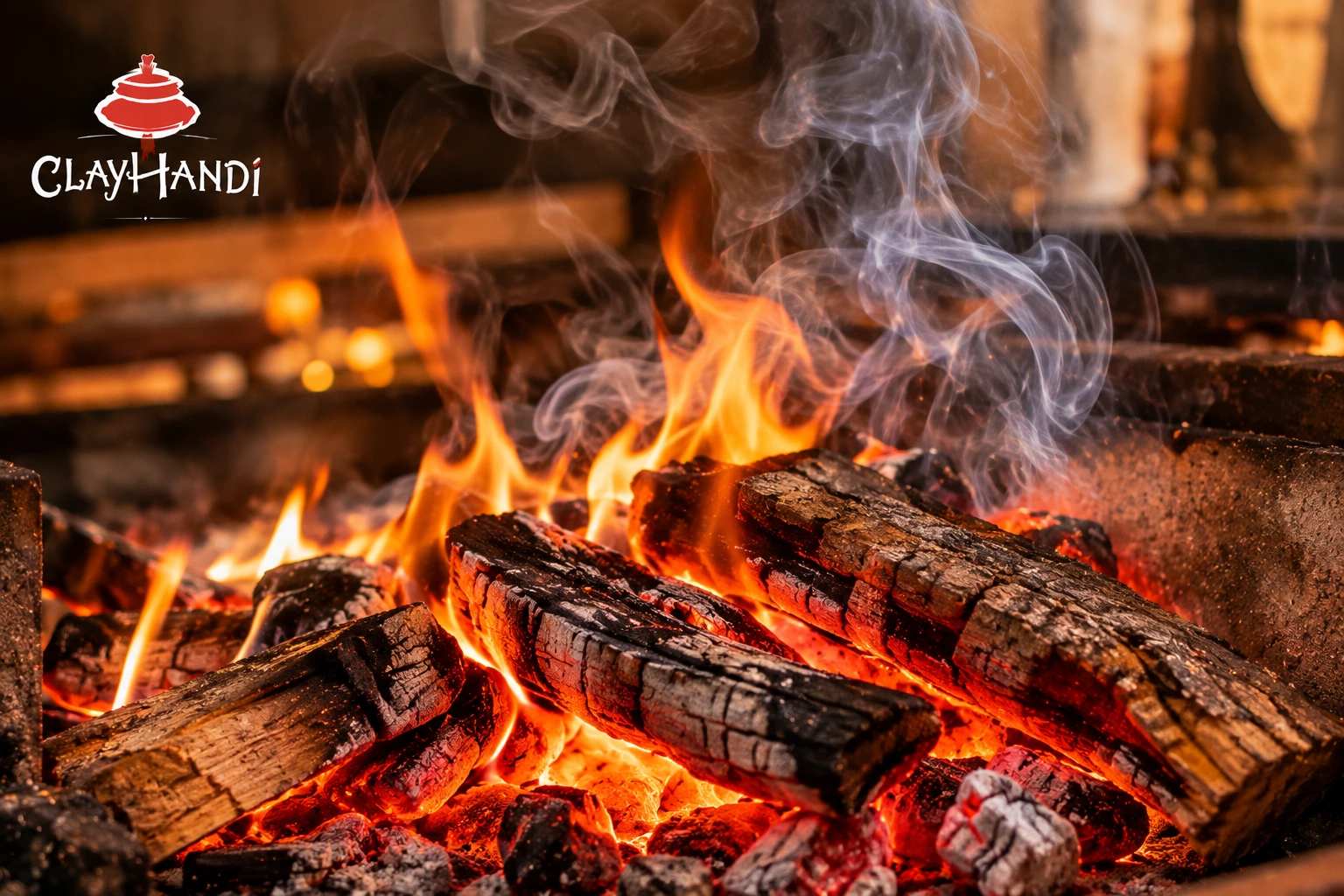
For smoke, yes. Charcoal cooking burns organic material, so it produces more smoke with a wider range of flavor molecules than a gas flame.
AmazingRibs makes this point, while also noting that many top steakhouses grill their best beef with gas. Great searing heat matters more than fuel for a thick steak.
So in the open fire vs gas debate, the fair answer is “it depends on the food.” Quick seared steaks barely notice the difference. Long cooked kebabs, whole chicken and anything that sits over the coals for a while pick up much more character from charcoal.
We’d put it this way: charcoal for kebabs and tikka, gentle steady heat for curries.
Why does campfire cooking taste so good?
Part of it is chemistry, and part of it is you. Campfire cooking surrounds you with the same aromas that are flavoring your food.
Evolutionary biologist Robert Dunn told Popular Science that eating by a fire gives you a double dose of aroma. You smell the smoke in your mouth and in the air around you at the same time.
The same article points to the effort you put in. Food we worked for, from gathering wood to tending coals, simply feels more rewarding.
None of that makes the flavor imaginary. Smell drives most of what we call taste, so a meal eaten in the smoke really does taste smokier.
When is a stove the better choice?
A stove is the better choice whenever control matters more than char. Simmering, reducing and gentle braising need heat you can turn down to a whisper and hold there for an hour.
Smoke also isn’t always welcome. A delicate sauce, a creamy korma or a pot of rice can taste ashy if it sits in heavy smoke.
That’s why so many traditional cooking methods split the work. Meat gets its char over fire, then finishes slowly in a pot where the spices can settle.
Is open fire cooking healthy?
Open fire cooking is fine in moderation, but charring deserves some care. The National Cancer Institute explains that cooking muscle meat at high heat, such as grilling over an open flame, forms compounds called HCAs and PAHs.
PAHs form when fat drips into the flames and the smoke settles on the meat. The NCI notes that studies have not established a definitive link between these compounds from cooked meat and cancer in people, but limiting exposure is sensible.
Easy ways to keep the flavor and cut the char:
- Turn meat often instead of leaving it still over high heat.
- Partly cook first, then finish over the fire, so meat spends less time in the flames.
- Trim off burnt bits before serving.
- Use marinades: yogurt based tandoori marinades also help keep meat from drying out.
How does Clay Handi use fire and clay?
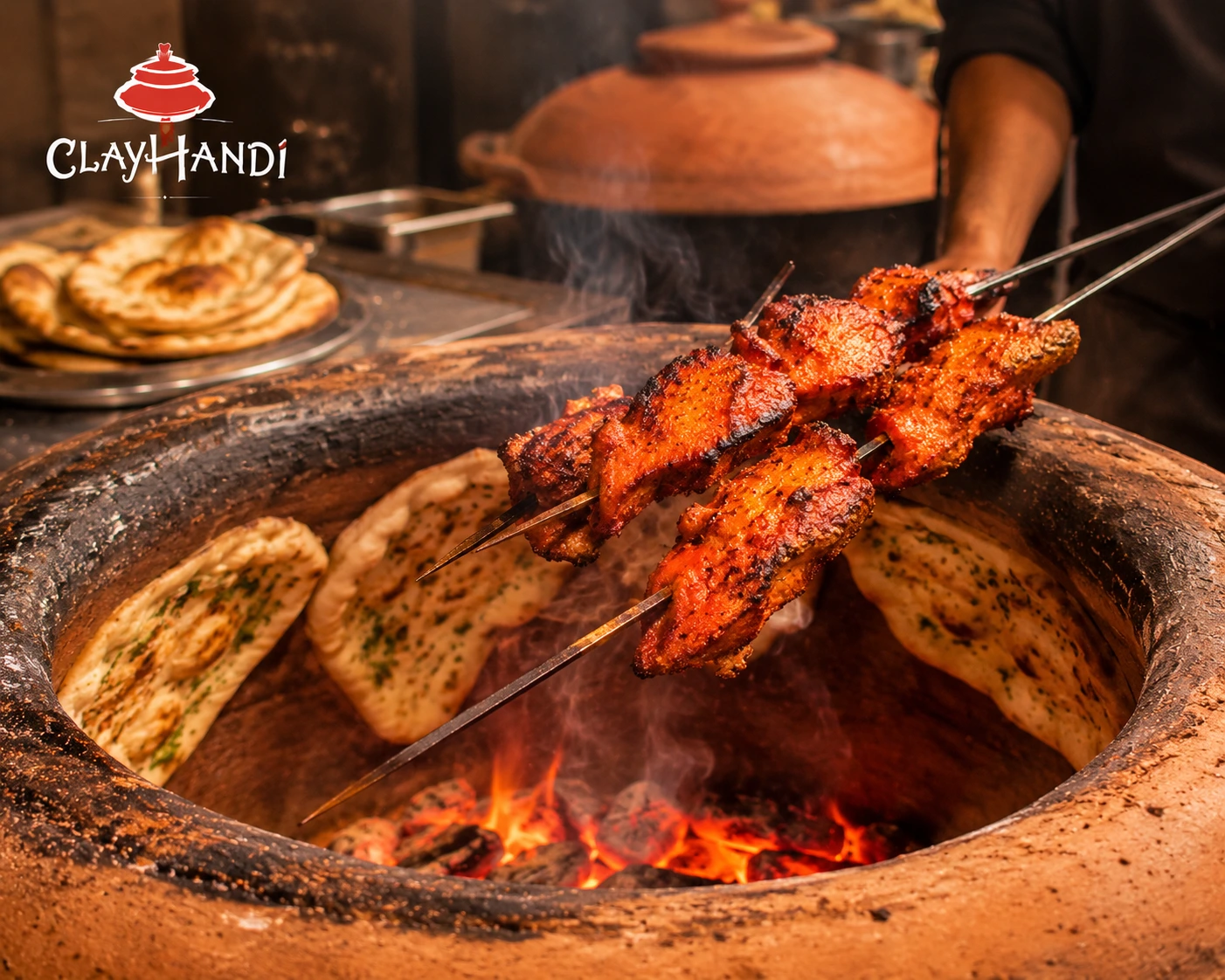
We use both, the same way South Asian kitchens always have. Our tandoor, a cylindrical clay oven, roasts tandoori chicken and bakes naan with intense radiant heat.
Some dishes get real coals. Our chicken charsi tikka is cooked with tomato, chili and garlic over charcoal for about an hour, and our tandoori fish comes out smoky and charred.
Browse the tandoori and grill menu for kebabs, boti and tikka cooked with fire.
Then there’s the steady side of the kitchen. Our curries slow cook in clay handis, where gentle heat matters more than smoke. You’ll find them on our chicken handi and karahi menu.
Curious why that slow clay cooking works? Our guide to what a handi is explains the science.
Craving something smoky tonight? Order online for pickup or delivery.
Open Fire vs Stove Cooking: FAQs
Can you get smoky flavor on a stove?
Yes. South Asian cooks use a trick called dhungar: set a small piece of red hot charcoal in a tiny bowl inside the pot, drizzle ghee over it, then cover the pot for a few minutes.
The smoke infuses the dish without any grill. Smoked paprika, toasted cumin and a hard sear in a very hot pan help too.
What is the best wood for wood fire cooking?
Dry hardwoods like oak, maple, hickory or fruitwoods burn hot and clean. Softwoods like pine produce sooty, bitter smoke.
Never cook over painted, treated or pressure treated lumber. Those chemicals end up in the smoke, and the smoke ends up in your food.
Is live fire cooking hard to learn?
Harder than a stove, yes. Fire changes constantly, so you manage heat by moving food and coals instead of turning a knob.
Start with glowing coals rather than tall flames. Coals give steadier, more even heat and far fewer flare ups.
Does food cooked on gas taste worse?
Not necessarily. Gas gives clean, easy to control heat, and fat dripping on a gas grill still makes some smoke.
For long cooked kebabs and whole birds, charcoal adds more character. For a quick sear or a delicate sauce, gas often does the job just as well.
So which gives better flavor?
For grilled meat and bread, open fire. For curries, sauces and anything that simmers, the stove. The real secret is using each one for what it does best.
You don’t need a fire pit to taste the difference. Visit us at 3054 Delaware Ave, Buffalo, NY 14217, or call (716) 877-7797.
You can also book a table, or bring tandoori platters to your next event with our catering service.