What You Need To Know
- A handi is a deep, round cooking pot with a wide mouth, traditionally made of clay or copper.
- The word also names the dish cooked in it, so chicken handi simply means chicken cooked in a handi.
- An earthen handi heats gently and traps steam, which is perfect for slow cooked curries.
- Earthen pot cooking in Pakistan and India goes back more than 4,000 years, to the Indus Valley.
- You can cook handi at home in a clay pot or a heavy Dutch oven. Just keep the heat low.
What is handi? It’s the pot our restaurant is named after, and the reason everything we serve reaches your table still bubbling in clay.
The handi meaning is simple: a deep cooking basin with a broad mouth, made from clay or copper, used mainly in Pakistani, Indian and Bangladeshi cooking. That’s how the Wikipedia entry on the handi defines it, too.
The word does double duty. It names both the vessel and the dish cooked in it, so a chicken handi is, quite literally, chicken in a clay pot.
We’ve cooked this way since 2011. Here’s the story behind the pot, and how to use one yourself.
What does handi mean?
Handi means cooking pot. The word comes from Hindi and Urdu, and in everyday use it points to a heavy, round bellied vessel with a wide mouth and usually a lid.
The closest Western cousins are the American beanpot and the Spanish olla. Both are deep, lidded pots built for long, gentle cooking.
Think of it this way: if the karahi is South Asia’s wok, fast, hot and open, the handi is its slow cooker. One is built for sizzle. The other is built for patience.
| Handi | Karahi | Matka | |
|---|---|---|---|
| Shape | Deep, round belly, wide mouth, lid | Wide and shallow, wok style | Round body, narrow neck |
| Usual material | Clay or copper | Iron or steel | Unglazed clay |
| Built for | Slow cooked curries, dal, biryani | Fast, high heat cooking | Storing and cooling water |
| Signature dish | Chicken handi | Chicken karahi | Matka biryani |
That last column causes a lot of confusion. A matka is traditionally a water pot that keeps drinking water cool, as the Wikipedia entry on the matki explains.
When people search for matka handi, they usually mean a clay handi, or a dish like matka biryani that is sealed and cooked in a clay pot.
Where does clay pot cooking come from?
Earthen pot cooking in this part of the world is ancient.
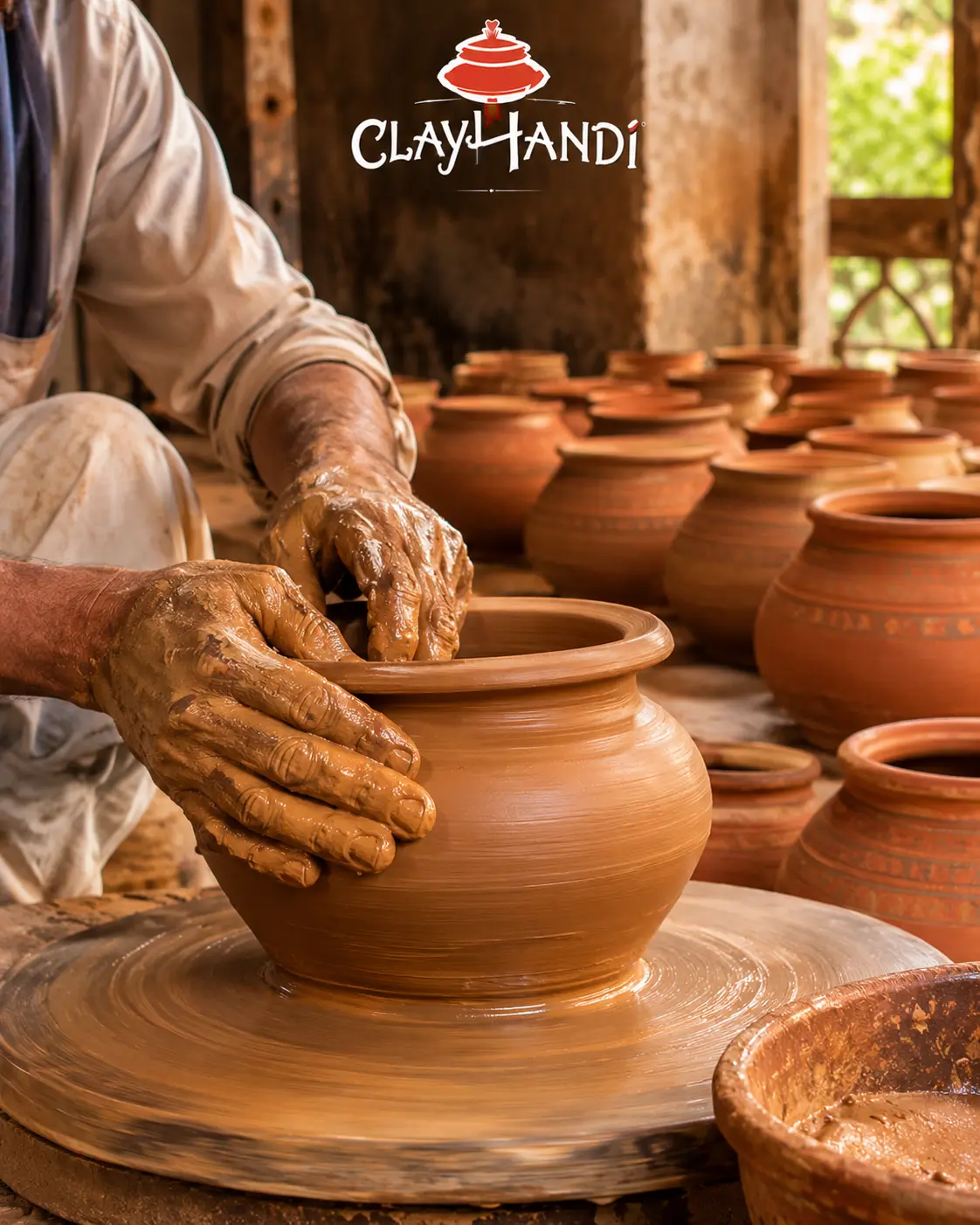
Terracotta cooking pots found at Nausharo, in today’s Balochistan, date to about 2300 to 2200 BC, according to Harappa.com’s collection of Indus cooking artifacts.
Chemistry backs this up.
A University of Cambridge led study, covered by The Wire Science in 2021, analyzed fat residues in Indus Valley pottery from cities and villages in northwest India.
The researchers found that people in both kinds of settlements used their pots for similar foods, including animal products, during the Mature Harappan period (about 2600 to 1900 BC).
Nobody can say those pots were called handis. But the idea, a heavy clay pot over a slow fire, really is that old.
Later came dum cooking, closely tied to Mughlai food.
In dum style handi cooking, the cook seals the handi’s lid with dough so steam can’t escape, and the food cooks in its own moisture, as Tarla Dalal’s handi guide describes.
The handi even shows up outside the kitchen. At the Dahi Handi festival, teams build human pyramids to break a clay pot of yogurt hung high overhead, celebrating Krishna’s birth.
Why does food taste different in a clay pot handi?
A clay pot handi cooks differently because clay heats slowly and evenly, and its thick walls hold that heat long after the flame drops.
Then there’s the steam, the same principle behind dum. With the lid on, moisture circulates instead of escaping, so meat braises in its own juices and gravies thicken slowly instead of scorching.
It’s the difference between a sauna and a hot plate. A thin metal pan blasts heat at the bottom. A clay handi wraps the food in gentle, moist warmth.
You’ll read plenty of health claims about earthen pot cooking, like clay making food alkaline or more nutritious. Honestly, most of those aren’t backed by solid studies.
What we can stand behind is texture and flavor: tender meat, silky gravy and spices that have time to settle. We’d argue that’s reason enough.
How does Clay Handi cook with the handi?
At our restaurant on Delaware Avenue, the handi isn’t decoration. Our curries are cooked in earthenware and brought to your table in the same pot, so they stay hot through the whole meal. Handi cooking is the heart of our kitchen.
The restaurant opened as Zaiqa in 2011 and became Clay Handi in 2017, when we committed fully to Pakistani clay pot cooking. You can read the full journey in our story.
Handi dishes worth trying on our menu:
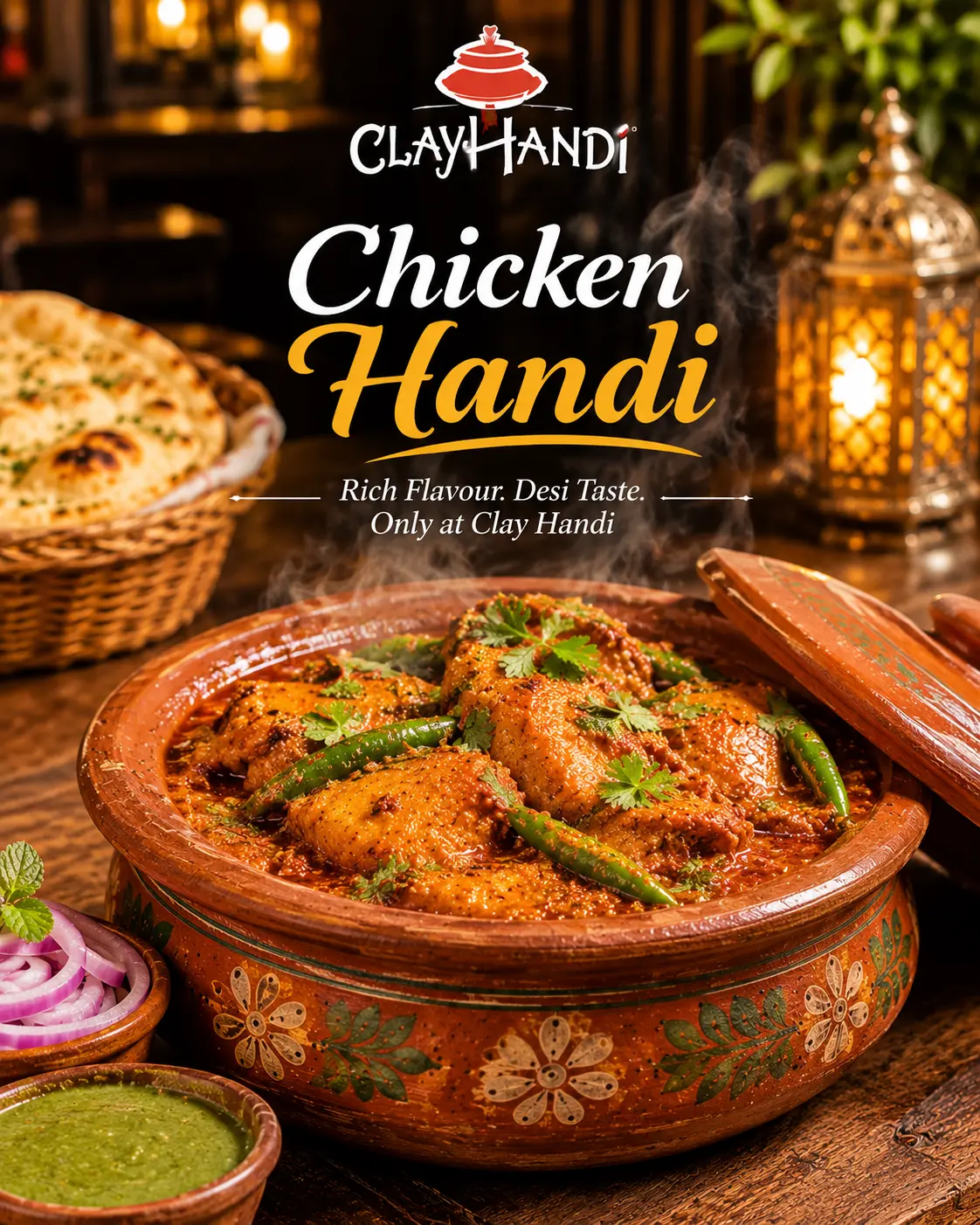
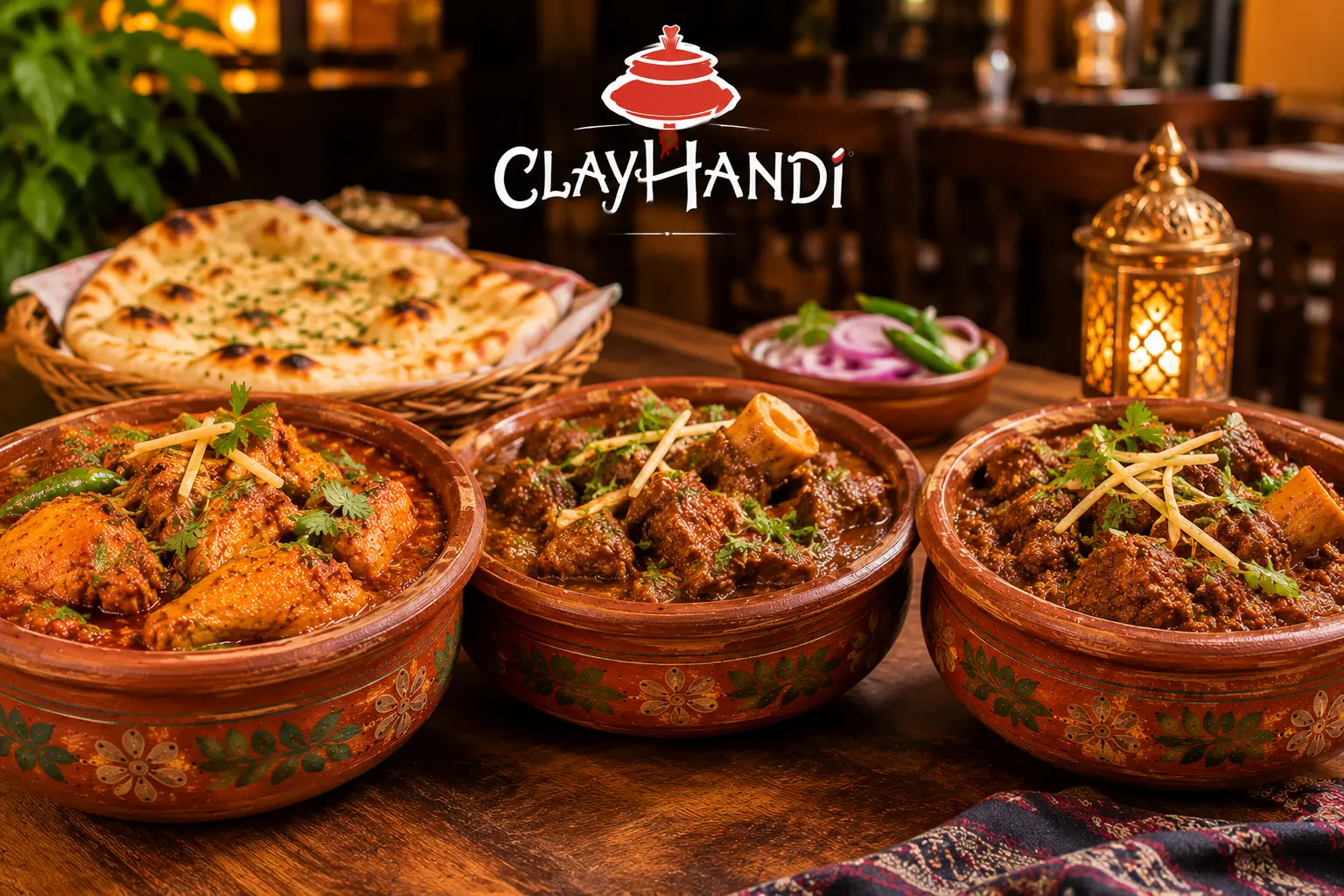
Chicken handi: chicken in a creamy gravy with warm spices, our most traditional handi. Find it with the rest of our chicken handi and karahi dishes.
Chicken boneless paneer handi: boneless chicken and paneer simmered together in one clay pot.
Mutton handi: lamb handi, goat handi and mutton daal handi, all on our mutton and lamb menu.
Chinoti kunna gosht: a specialty from Chiniot, meat slow cooked in a clay pot with whole spices.
Want the real thing without the dishes? Order online and we’ll pack your handi hot for pickup or delivery.
How do you make a chicken handi recipe at home?
Every good handi recipe follows the same pattern: marinate, build a base, then cook low and slow with the lid on. Here’s a simple home style chicken handi that serves four.
No clay pot? A heavy cast iron Dutch oven is the closest substitute. You’ll lose a little of the earthy aroma, but not much else.
Ingredients
- 2 lb bone-in chicken, cut into curry pieces
- 1 cup plain yogurt
- 2 medium onions, thinly sliced
- 2 ripe tomatoes, chopped
- 1 tbsp ginger paste and 1 tbsp garlic paste
- 3 to 4 green chilies, slit
- 1 tsp cumin seeds, 1 tsp coriander powder, 1 tsp red chili powder, half a tsp turmeric
- 1 tsp garam masala
- 3 tbsp oil or ghee, salt to taste, fresh cilantro
- 3 tbsp cream (optional)
Method
- Mix the chicken with yogurt, ginger, garlic and salt. Rest it for at least 30 minutes.
- Warm the oil in the handi over low to medium heat. Add cumin seeds, then onions, and cook until golden, about 10 minutes.
- Add tomatoes and the ground spices. Cook until the oil starts to separate from the masala.
- Add the chicken and marinade, stir, cover and cook on low for 25 to 30 minutes, stirring once or twice.
- Stir in cream, garam masala and green chilies. Rest covered for 5 minutes, top with cilantro and serve in the pot with naan.
New to earthen pot cooking? Three rules keep the pot from cracking:
- Season it first: soak a new unglazed pot in water for a few hours, then let it dry before the first use.
- Keep the heat low: clay suits low to medium low heat, never a roaring flame.
- Avoid temperature shocks: never pour cold water into a hot pot or set it on a cold, wet counter.
What Is a Handi? FAQs
What is the difference between a handi and a karahi?
A handi is a deep, lidded pot for slow cooking, usually clay. A karahi is a wide, open, wok style pan for fast cooking over high heat.
So chicken handi is creamy and slow braised, while chicken karahi is drier, punchier and cooked quickly. We serve both, and they’re worth comparing side by side.
Is handi Pakistani or Indian?
Both. The handi is used across Pakistan, India and Bangladesh, and its roots predate all three countries.
Pakistani handi dishes often lean on meat, like mutton handi or kunna gosht. Indian kitchens also use the handi for dal, paneer and vegetable dishes.
What is matka handi?
Matka handi usually means a clay handi, or food cooked and served in a matka style earthen pot. Matka biryani is the best known example.
Strictly speaking, a matka is a water storage pot, while a handi is a cooking pot. In everyday speech, the two words often blur together.
Can you cook handi without a clay pot?
Yes. A heavy Dutch oven or any thick bottomed pot with a tight lid works well. The key is low heat and a closed lid, not the clay itself.
What you’ll miss is the faint earthy aroma that clay adds. For that, a meal at a restaurant that cooks in clay is the easy shortcut.
Is food cooked in a clay pot healthier?
Not in any proven way. Claims that clay adds minerals or balances acidity are common, but solid research is thin.
What clay does well is cook gently with little evaporation, so you may need less oil to keep food moist. Healthier ingredients matter far more than the pot.
So what makes a handi worth the wait?
Patience, mostly. A handi turns ordinary ingredients into something deeper because it refuses to rush them.
If you’re curious how our two kitchens differ, read our guide to Pakistani vs Indian food next.
Or skip the reading and taste it. Visit us at 3054 Delaware Ave, Buffalo, NY 14217, or call (716) 877-7797.
You can also book a table, or bring the handi to your next event with our catering service.