What You Need To Know
- Pakistani and Indian food share roots in Punjab and the Mughal Empire, so many dishes overlap.
- Pakistani food puts meat at the center: beef, mutton and chicken, all halal.
- Indian cuisine is far more regional and has a much deeper vegetarian tradition.
- Pakistani spices are usually fewer and bolder. Indian cooking layers more of them.
- The closest match is North Indian vs Pakistani food. South Indian food is a different world.
Pakistani vs Indian food is one of the questions we hear most at our tables in Buffalo. The short answer: they’re siblings, not twins.
The main difference between Pakistani and Indian food is emphasis. Pakistani cooking is built around meat, usually halal beef, mutton and chicken, with simpler spice blends that let the meat lead. Indian cuisine covers far more regional styles and leans harder on vegetables, lentils and layered spice.
We cook both under one roof, in clay pots, on Delaware Avenue. So we’ll be straight with you about where the lines really fall, and where they don’t.
What is the difference between Pakistani and Indian food?
The difference comes down to five things: protein, spice, region, religion and staples. Here’s the quick side by side.
| Pakistani food | Indian food | |
|---|---|---|
| Main protein | Beef, mutton, chicken, all halal | Chicken, mutton, fish; beef is rare; huge vegetarian range |
| Spice style | Fewer spices, bold heat, meat forward | Layered blends, whole spices tempered in oil |
| Regional range | Punjab, Sindh, Khyber Pakhtunkhwa, Balochistan | Dozens of distinct state cuisines |
| Signature dishes | Karahi, nihari, haleem, sajji | Palak paneer, dosa, dal makhani, butter chicken |
| Daily staple | Naan or roti with most meals | Roti in the north, rice in the south |
One honest caveat: these are tendencies, not laws. A family in Lahore and a family in Amritsar can cook almost the same dinner.
Why do Pakistani and Indian food taste so similar?
Pakistani and Indian food taste similar because, until 1947, they were one food culture. Partition drew a border straight through Punjab, and kitchens on both sides kept making the same parathas and sarson ka saag.
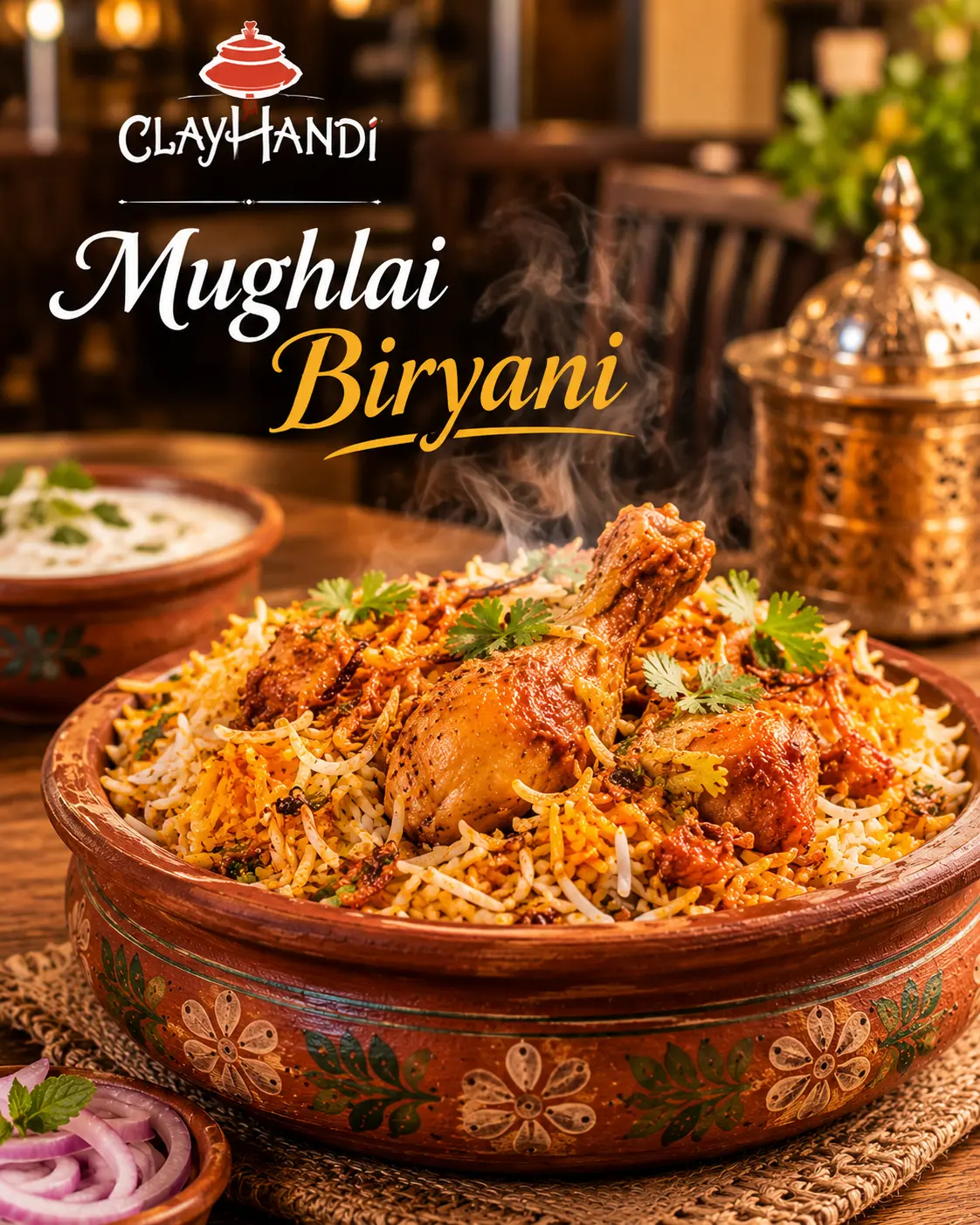
The other shared ancestor is Mughlai cuisine, the court food of the Mughal Empire. According to the Mughlai cuisine entry on Wikipedia, it fused Persian cooking with local spices and gave the region biryani, korma, kebabs and nihari.
The Mughal Empire’s rulers came from Central Asia, and Atlas Obscura’s look at Mughal court recipes shows how Indian mango and tamarind ended up in Persian style meat and rice dishes.
Think of it like British and American English. Same grammar, same root words, but after generations apart, each side grew its own accent. Pakistani and Indian cuisine are two accents of one language.
How are Pakistani spices different from Indian spices?
Pakistani spices tend to be fewer in number but bolder in punch. A karahi can lean on little more than tomato, ginger, garlic, green chili, cumin and black pepper, and let the meat do the talking.
Indian cooking, especially in the south and west, layers more. Many dishes start with a tadka (whole spices sizzled in hot oil or ghee), often mustard seeds, curry leaves and asafoetida.
A tadka works a bit like toasting bread before you butter it. Heat wakes the flavor up, and the hot fat carries it into everything that follows.
So which is hotter? Honestly, it depends on the dish. A Sindhi biryani can bring real heat, and so can a curry from South India. We’d say the bigger difference is the spotlight: Pakistani food gives it to the meat, and Indian food often gives it to the spice blend.
Is Pakistani food more meat heavy than Indian food?
Yes, and religion is the main reason. Pakistan’s 2023 census found that about 96% of the population is Muslim, as reported by Dawn, so halal meat, including beef, sits at the center of most meals.
India is close to the opposite case. A 2021 Pew Research Center survey found that 39% of Indian adults call themselves vegetarian, and about eight in ten limit meat in some way.
That’s why the vegetarian side of Indian cuisine runs so deep: palak paneer, bhindi masala, aloo matar and dozens of dals. Beef, on the other hand, rarely shows up on Indian menus.
Curious what halal actually changes about the meat on your plate? Our guide to halal food walks through it in plain language.
North Indian vs Pakistani food: where is the real line?
North Indian vs Pakistani food is where the overlap is biggest. Punjabi cooking on both sides of the border shares tandoori breads, makki ki roti, yogurt marinades and rich, buttery gravies.
The line gets sharper as you move away from Punjab. In Pakistan’s northwest, salted lamb is grilled over charcoal with clear Afghan influence. On the Sindh coast, cooks make tamarind fish soups.
Cookbook author Maryam Jillani points out in her SBS Food piece on Pakistani cuisine that the food kept evolving after Partition, absorbing Afghan and migrant influences.
Travel south in India and you’re eating rice, coconut, lentil pancakes and curry leaves. So when people talk about desi food differences, they’re usually comparing Lahore to Delhi. Compare Peshawar to Chennai and the two barely look related.
Which Pakistani dishes should you try first?
If you’re new to Pakistani dishes, start with the ones you’re less likely to find on a standard Indian menu:
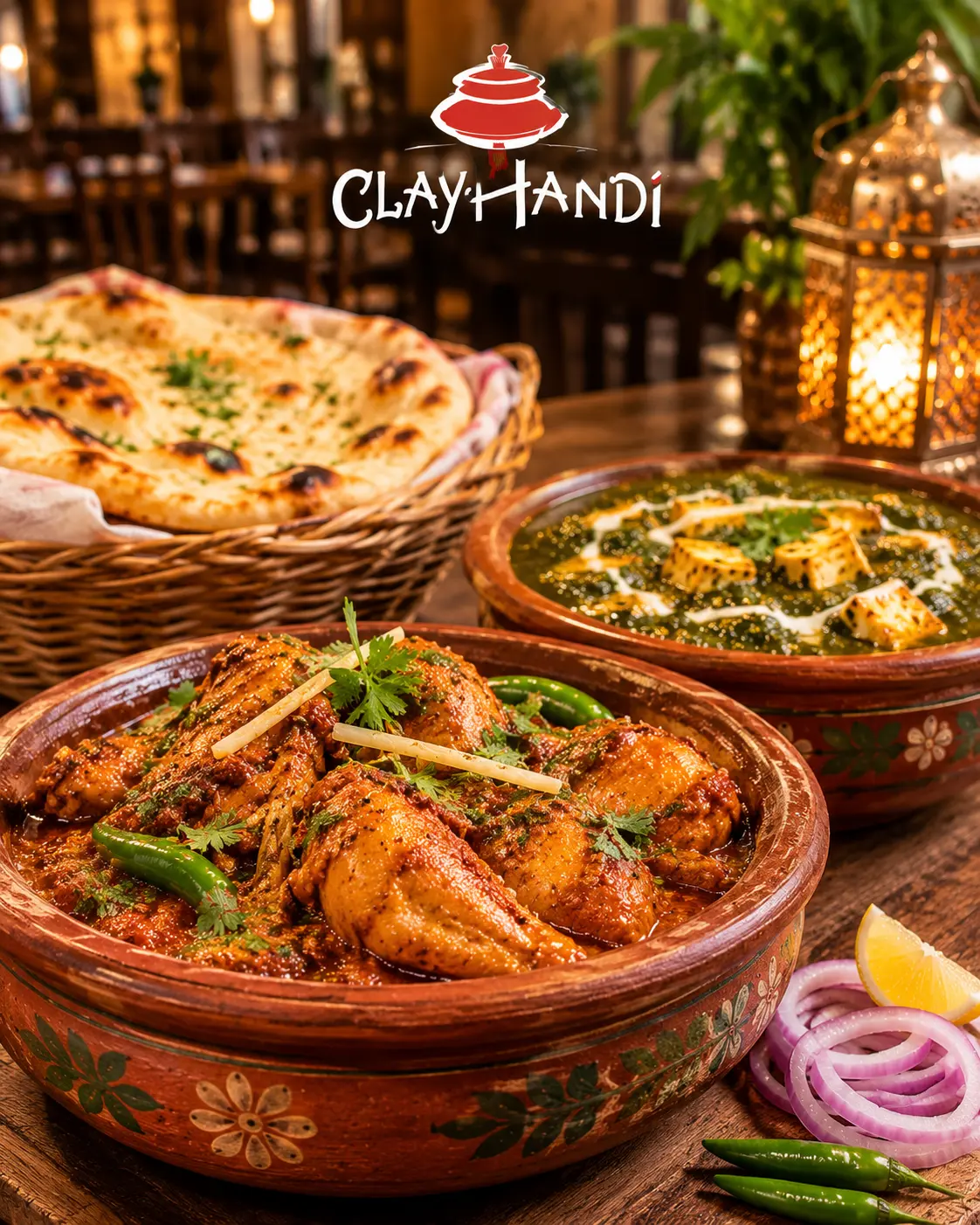
Karahi: meat cooked fast in a wok style pan with tomato, ginger and green chili. Plenty of Pakistanis call chicken karahi the unofficial national dish.
Nihari: beef or mutton slow cooked for hours into a thick, silky stew, finished with fresh ginger.
Haleem: meat and lentils cooked down until they melt together.
Sajji: a whole chicken or leg of lamb roasted slowly, a Balochi specialty.
Kunna gosht: mutton slow cooked in a clay pot, one of the dishes our signature Pakistani cuisine menu is built around.
Coming from the Indian side? Our traditional Indian cuisine menu covers palak paneer, daal and bhindi masala, and the vegan and vegetarian dishes go further still.
Everything at Clay Handi is cooked and served in clay pots made from Himalayan clay. The pot traps steam, so curries stay moist while the spices slowly settle into the meat.
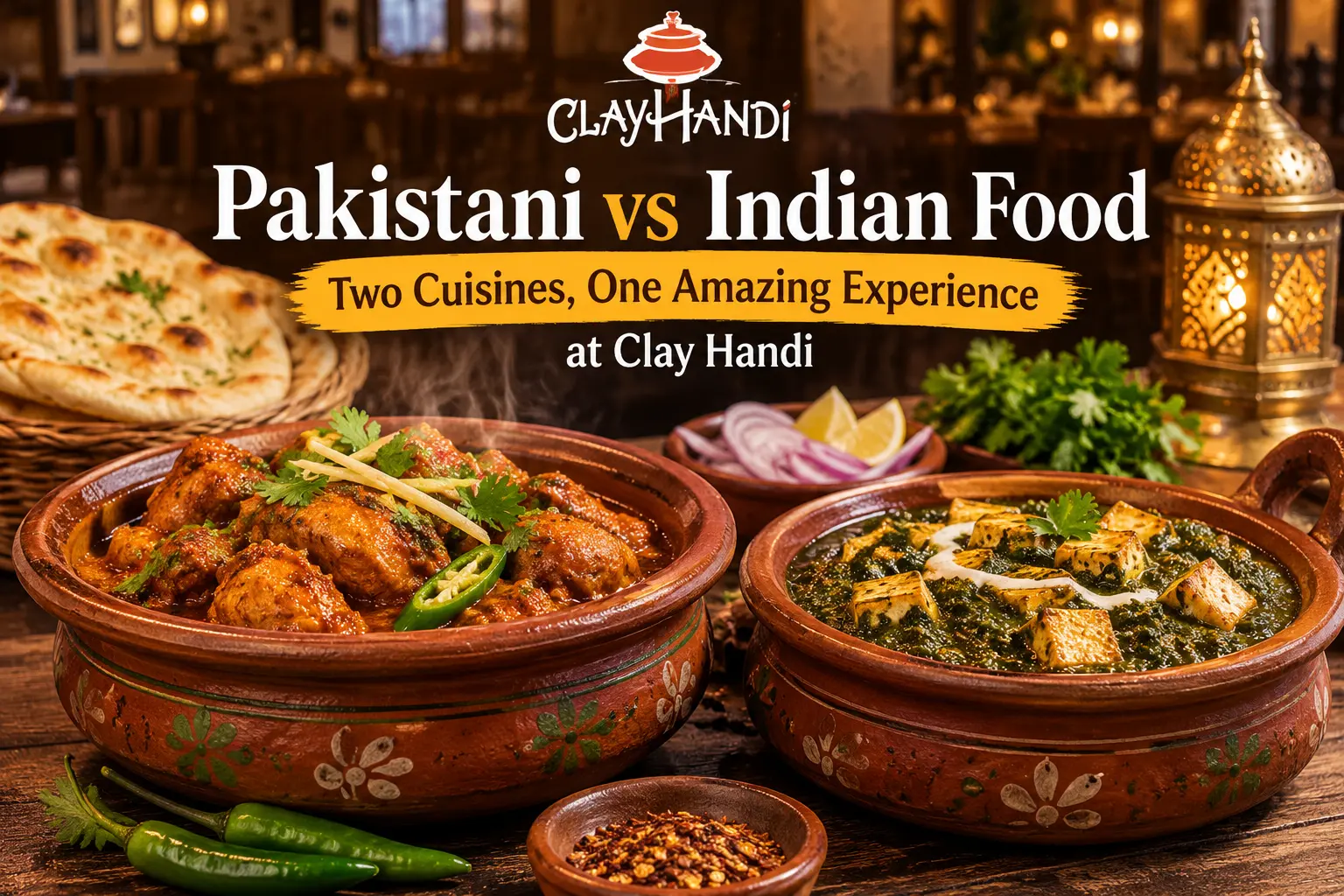
Want to taste the difference side by side? Order a chicken karahi and a plate of palak paneer, then compare. You can order online for pickup or delivery.
Pakistani vs Indian food: FAQs
Is Pakistani food spicier than Indian food?
Not consistently. Pakistani food uses fewer spices with more direct heat from green chili and black pepper, so a karahi can feel fiery.
But Indian food covers a huge range, and some South Indian curries are hotter than anything on a typical Pakistani menu. Heat depends on the dish more than the country.
Is all Pakistani food halal?
In Pakistan, almost all meat is halal because about 96% of the population is Muslim. Abroad, it depends on the restaurant, so it’s fair to ask where the meat comes from.
At Clay Handi, every dish follows halal standards. Our halal food page explains how we approach it.
Is biryani Pakistani or Indian?
Both. Biryani came out of Mughal kitchens long before Partition, so neither country owns it outright.
What differs is style. Karachi biryani is usually spicier and often includes potatoes, while Hyderabadi biryani in India is known for slow, layered dum cooking.
Can vegetarians eat well at a Pakistani restaurant?
Yes, though the menu will lean on meat. Pakistani kitchens still cook dal, chana, bhindi and mixed vegetable curries, usually with fresh naan.
Indian menus simply offer more of them, plus paneer. At a restaurant that serves both cuisines, vegetarians get the widest choice.
Why do some Pakistani restaurants call themselves Indian?
Mostly for recognition. In the US and UK, “Indian food” became the familiar label for South Asian cooking decades ago, so many Pakistani owned restaurants used it.
One giveaway: beef karahi or beef nihari on an “Indian” menu usually means the kitchen cooks in the Pakistani tradition.
So should you order Pakistani or Indian?
Order by mood, not by flag. Craving slow cooked meat and bold heat? Go Pakistani.
Want variety, vegetables and layered spice? Go Indian. Want both? That’s exactly why we cook both.
Visit us at 3054 Delaware Ave, Buffalo, NY 14217, call (716) 877-7797, or book a table.
Feeding a group? Our catering menu mixes both cuisines, so nobody has to pick a side.